
Imagine spending hours writing the perfect blog post, only for Google to act like it does not exist. Frustrating, right? This happens more often than you think, and the real problem usually has nothing to do with your writing. It is hiding behind the scenes, in your website’s technical setup. This is where technical SEO steps in. Think of it as a house’s foundation. No matter how beautiful the rooms look, the whole thing can crumble if the base is weak.
If you run a business in Saudi Arabia and want to win online, you can’t skip technical SEO anymore. In this guide, we will break down what it really means, why it matters so much, and how the right SEO expert in Riyadh can find and fix the hidden issues quietly holding your website back. Want more simple SEO tips and guides like this? Visit our blog and stay ahead of your competition.
What Is Technical SEO?
Technical SEO is the process of optimizing your website so that search engines like Google can find, crawl, understand, and index your pages easily. In simple words, it is about making sure the “behind the scenes” parts of your website work smoothly, so both search engines and users have a good experience.
Unlike content SEO, which focuses on keywords and writing, technical SEO focuses on the structure and performance of your site. This includes things like:
- Site speed and loading time
- Mobile friendliness
- Website structure and internal linking
- XML sitemaps and robots.txt files
- Secure connections (HTTPS)
- Fixing broken links and duplicate content
- Structured data (schema markup)
- Core Web Vitals
If any of these areas are weak, search engines may struggle to crawl your site properly. This means even great content can stay buried on page five of Google, where almost no one will ever see it.
Why Is Technical SEO Important?
Many business owners focus only on content and backlinks, thinking that is all SEO is about. But technical SEO importance goes far beyond just “being present” on Google. Here is why it matters so much.
1. It Helps Search Engines Understand Your Website
Search engines use bots called crawlers to scan your website. If your site has broken links, slow pages, or a messy structure, crawlers may not be able to reach all your pages. This means some of your content might never appear in search results at all, no matter how good it is.
2. It Directly Affects User Experience
A slow, broken, or confusing website frustrates visitors. People leave within seconds if a page takes too long to load or does not work well on their phone. Google notices this behavior and can lower your rankings as a result. Good technical SEO keeps visitors on your site longer, which search engines reward.
3. It Improves Your Rankings on Google
Google has confirmed that page experience, including speed and mobile usability, is a ranking factor. So, technical SEO benefits are not just about being crawlable. They directly influence where you land on the search results page.
4. It Builds Trust and Credibility
A secure, fast, and well-structured website looks more professional and trustworthy, both to users and to search engines. Since Google prioritizes safe browsing (HTTPS is a must), skipping this step can quietly damage your credibility.
5. It Supports Every Other SEO Effort
Think of technical SEO as the foundation of a house. You can decorate the rooms with beautiful content and marketing, but if the foundation is weak, the whole structure is at risk. Without a technically sound website, your content marketing, link building, and paid campaigns will not reach their full potential.
Technical SEO Explained: The Core Elements
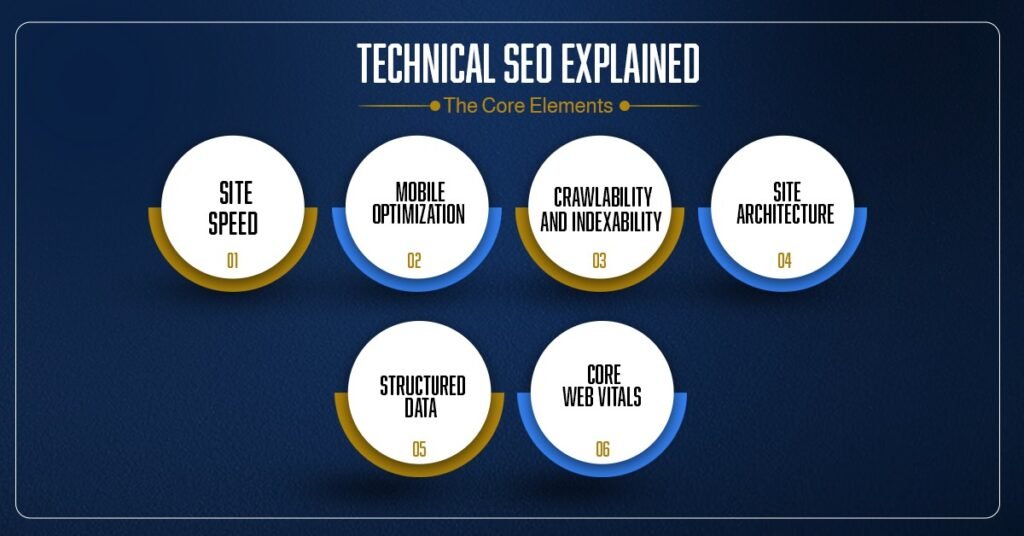
Let us break down technical SEO in a simple, practical way, so you know exactly what to check.
Site Speed: Pages that load in under three seconds keep users engaged and reduce bounce rates.
Mobile Optimization: Since most searches now happen on mobile, Google uses mobile-first indexing, meaning it looks at your mobile site first when ranking you.
Crawlability and Indexability: Your robots.txt file and XML sitemap guide search engines on what to crawl and index.
Site Architecture: A clean, logical structure with clear internal linking helps both users and search engines navigate your site easily.
Structured Data: Adding schema markup helps search engines understand your content better and can lead to rich results like star ratings or FAQ snippets in search.
Core Web Vitals: These are Google’s specific metrics for loading speed, interactivity, and visual stability. They are a confirmed part of Google’s ranking system.
If you are unsure where your website stands on any of these points, a professional audit from an SEO specialist in Saudi Arabia can pinpoint exactly what needs fixing.
Why You Need Professional Help for Technical SEO
Technical SEO is not something you fix once and forget. Search engines update their algorithms regularly, and your website changes over time too, whether through new pages, plugins, or design updates. This is why working with an experienced SEO expert in Riyadh makes such a big difference.
A skilled SEO specialist in Riyadh does not just point out problems. They build a step-by-step plan to fix crawl errors, improve site speed, clean up your structure, and make sure your website is fully optimized for both users and search engines. With the right SEO services in Riyadh, you get ongoing monitoring, so small issues get caught before they turn into big ranking drops.
As search behavior keeps evolving, especially with AI-powered search results becoming more common, working with an AEO expert in Riyadh is also becoming important. Answer Engine Optimization focuses on structuring your content so AI tools and voice assistants can pull accurate answers directly from your website, giving you visibility in places traditional SEO alone cannot reach.
Conclusion
Technical SEO doesn’t make headlines. It makes rankings happen. It will not give you a catchy headline or a viral post. But it works quietly behind the scenes, and it is often the real reason your website wins or loses in search results. Without a strong technical base, even the best content and the smartest marketing ideas will struggle to get seen. From site speed and mobile usability to crawlability and structured data, every small piece plays a big role in how search engines see, trust, and rank your website.
If you want your business to truly stand out online in Saudi Arabia, fixing your technical SEO cannot wait any longer. It is a must-have, not just a nice-to-have. This is exactly where a trusted SEO expert in Riyadh can make all the difference. And here is the good news: you do not have to solve it alone. Ready to fix your website’s technical SEO and finally rank where you deserve? Contact us today and let us show you exactly what is holding your site back.
FAQ’s
1. What is technical SEO in simple words?
Technical SEO improves the backend of your website, speed, structure, and mobile-friendliness, so search engines can crawl and rank it properly.
2. Why is technical SEO important for small businesses?
Small businesses often compete against bigger brands online. Strong technical SEO levels the playing field by making sure your website is fast, mobile-friendly, and easy for Google to find and rank.
3. How is technical SEO different from on-page SEO?
On-page SEO focuses on content and keywords within a page. Technical SEO focuses on the website’s structure, speed, and crawlability, which support everything else.
4. How often should technical SEO be checked?
Ideally, a technical SEO audit should be done every three to six months, or whenever you make major changes to your website.
5. Can I do technical SEO myself, or do I need an expert?
Basic fixes like image compression are possible on your own. Still, deeper issues like crawl errors, schema markup, and Core Web Vitals usually need an experienced SEO expert in Saudi Arabia to fix correctly.